
Fat Loss · Beginner · 4 min read
Walking for Fat Loss: The Most Underrated Tool
Walking is not flashy, but it may be the most underrated fat-loss tool there is. It burns a meaningful number of calories, improves almost every health marker, and barely touches the recovery you need for lifting. It is the lever most people underuse — and the easiest one to pull every single day.

On this page
Why walking works
The calories you burn outside the gym — walking, standing, moving around — often vary by several hundred a day between people, and they quietly fall during a diet as your body conserves energy. Deliberate walking counters that drop.
Unlike hard cardio, walking creates almost no fatigue. You can do it every day, on training days and rest days, without it eating into the quality of your lifting — which is exactly what protects your muscle while you lose fat.
How many calories walking burns
A useful rule of thumb: walking burns roughly 0.5 calories per kilogram of bodyweight per kilometre. For an 80 kg person, that is about 40 calories per kilometre — or around 300 to 400 calories for 10,000 steps.
- 2,000 stepsAbout 60 to 80 kcal15 to 20 minutes
- 5,000 stepsAbout 150 to 200 kcal40 to 50 minutes
- 10,000 stepsAbout 300 to 400 kcal80 to 100 minutes
Those numbers add up fast. An extra 4,000 steps a day is roughly 800 to 1,000 calories a week — for many people, a quarter or more of their weekly deficit, without a single minute of hard cardio.
Step targets
Start from your real baseline, not a number from the internet. Check your phone's step count for the past two weeks, then add to it gradually:
- Week 1Your current average plus 1,000
- Week 2Plus 2,000
- Week 3Plus 3,000
- Week 4 onwardAround 8,000 to 12,000 — whatever you can repeat daily
Large studies link more daily steps with lower risk of early death up to roughly 8,000 to 10,000 steps a day for adults, so the health benefits and the fat-loss benefits point in the same direction. The best target is the one you can hit every day without it taking over your life.
How to add steps without trying
- A 10-minute walk after each main meal
- Walk during phone calls and meetings
- Park further away or get off transport a stop early
- Take the stairs by default
- An incline treadmill walk after lifting
- A longer walk on rest days, with music or a podcast
- Saving it all for one exhausting session
- Letting steps drop on weekends
Short walks after meals have an extra benefit: they help smooth out blood sugar after eating. Small chunks through the day count just as much as one long walk.
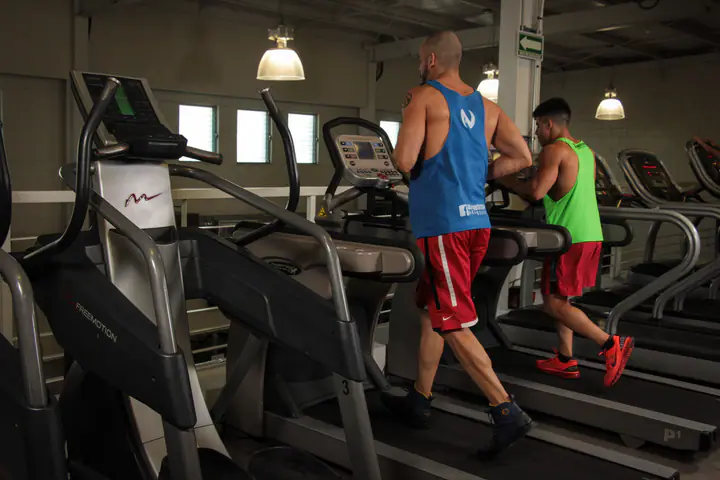
Walking vs intense cardio
| Walking | HIIT and hard cardio | |
|---|---|---|
| Calories per minute | Lower | Higher |
| Fatigue and recovery cost | Very low | High |
| Can do it daily | Yes | No — two or three times a week at most |
| Effect on lifting | Almost none | Can blunt strength and leg performance |
| Adherence | Easy | Harder, especially when dieting |
HIIT and running have real benefits for fitness, but they are more fatiguing, harder to sustain and easier to overdo during a cut. For most fat-loss phases, daily walking should be the base, with a little harder cardio on top if you enjoy it. See cardio for fat loss and the calorie deficit.
- Walking burns meaningful calories with almost no recovery cost.
- Roughly 0.5 kcal per kg per km: about 300 to 400 kcal per 10,000 steps for an 80 kg person.
- Build up from your own baseline toward 8,000 to 12,000 steps a day.
- Short walks after meals and walking calls all count.
- Make walking the base of a cut, with harder cardio as an optional extra.
Frequently asked questions
How many steps should I take to lose fat?
Many people do well around 8,000 to 12,000 steps a day during a cut, but the right number depends on your baseline and calorie intake. Add steps gradually from your current average.
Is walking better than running for fat loss?
Running burns more per minute, but walking is easier to recover from and to do every day. For most lifters, walking is the more sustainable choice.
Does walking build muscle?
Not meaningfully for trained lifters. Its role is burning calories, supporting health and aiding recovery.
Is it better to walk fasted?
Fasted walking does not lead to more fat loss over time when total calories are the same. Walk whenever it fits your day.
Should I walk on training days too?
Yes. Walking adds almost no fatigue, so keeping your steps up on training days is fine and helps keep your daily calorie burn consistent.
Related guides
How to Lose Fat (and Keep Your Muscle)
How to lose fat the right way: create a calorie deficit, keep protein high, keep lifting to retain muscle, and lose fat at a sustainable rate.
Beginner · 3 min read
Cardio for Fat Loss: HIIT vs LISS
Cardio for fat loss explained: HIIT vs steady-state (LISS), how much cardio you need, and how to add it without hurting your lifting and recovery.
Intermediate · 4 min read
Calorie Deficit: The Foundation of Fat Loss
What a calorie deficit is, how to calculate yours from your TDEE, how big it should be, and how to maintain it without losing muscle or your sanity.
Beginner · 4 min read
HIIT Workouts: What They Are and When They Actually Help
What HIIT really is, how it compares with steady cardio for fat loss, how to build an interval session, and how much you can do without wrecking your lifting.
Intermediate · 4 min read
This guide is general educational information, not medical advice. Train within your ability and consult a qualified professional before starting a new program if you have an injury or health condition.