
Ankle Circles
The Ankle Circles is an isolation movement that targets the tibialis directly. This guide covers the setup, the execution, the mistakes worth fixing early, and how to program it.
This is a mobility movement for the tibialis. Held regularly, it restores the range you lose to sitting and heavy training, and it makes the positions your lifts demand easier to reach.
Who it is for. Everyone. Use it in a warm-up as a brief active hold, or after training and on rest days as a longer relaxed one.
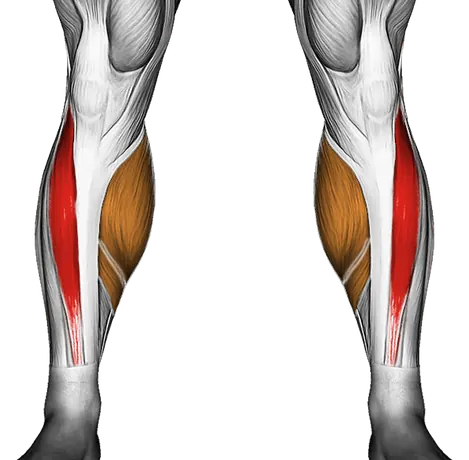
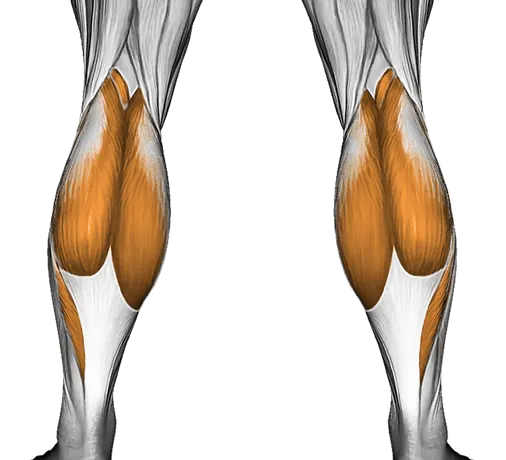
Muscles worked
The prime mover here is the tibialis, with calves assisting — which is why this movement earns its place as more than a single-muscle exercise.
How to do it
- Get into position slowly and find the point where you feel a stretch but no pain.
- Set your breathing before you push any further — tension and a held breath fight the stretch.
- Use your bodyweight or a wall for support if it helps you relax into the position.
- Ease into the stretch until you feel a firm but comfortable tension in the tibialis.
- Hold and breathe slowly, letting the tension fade with each exhale.
- Come out of the position as slowly as you went in, and repeat on the other side where the movement is one-sided.
Breathing. Breathe slowly and deeply throughout, and let each exhale carry you a little further into the position.
Form cues that matter
- Stretch to tension, never to pain.
- Breathe out and sink a little deeper.
- Match both sides, even if one is tighter.
- Bouncing in and out of the end range
- Pushing into real pain
Common mistakes
| The mistake | Do this instead |
|---|---|
| Bouncing in and out of the end range | Hold still; bouncing triggers a reflex that tightens the muscle you are trying to lengthen. |
| Pushing into real pain | Back off to firm tension — pain means you have gone past what the tissue will adapt to. |
| Holding long static stretches right before heavy lifting | Keep pre-lift stretches short and active; save the long holds for afterwards. |
What makes this variation different
The Ankle Circles is a specific version of this movement, and the details in its name change how it should be performed.
- Using only your bodyweight means you can train anywhere, and it keeps the whole body involved in stabilising the movement. Progress comes from leverage, range and reps rather than from adding plates.
Sets, reps and rest
| Goal | Sets | Reps | Rest |
|---|---|---|---|
| Strength | 3-5 | 20-30 s | 15-30 s |
| Muscle growth | 3-4 | 30-45 s | 15-30 s |
| Endurance | 2-3 | 45-60 s | 15-30 s |
How to progress
Progress by range and frequency, not intensity. Aim for a slightly deeper comfortable position each week, and hold it most days rather than pushing hard once a week.
Variations and alternatives
If you do not have the equipment, or you simply want to rotate the stimulus, these 8 movements train the tibialis in a similar way.
- Above Head Chest Stretch — Bodyweight
- Adductor Stretch — Bodyweight
- Back Pec Stretch — Bodyweight
- Backward Abdominal Stretch — Bodyweight
- Band Warm Up Shoulder Stretch — Resistance band
- Boat Stretch — Bodyweight
- Bridge Pose Setu Bandhasana — Bodyweight
- Butterfly Yoga Pose — Bodyweight
Safety
Key takeaways
- Stretch to tension, never to pain.
- Breathe out and sink a little deeper.
- Work in the 30-45 s rep range for muscle growth, leaving a rep or two in reserve on most sets.
- Full range of motion on the Ankle Circles matters more than the weight on it.
- Progress gradually and keep technique identical as the load goes up.
Go deeper
FAQ
What muscles does the Ankle Circles work?
It works the tibialis as the prime mover, with calves assisting. The midsection also works throughout to keep you stable.
How many sets and reps should I do on the Ankle Circles?
Three to four working sets of 30-45 s reps suits most people training for muscle growth, leaving one or two reps in reserve. Across all the exercises that train this muscle, - hard sets a week is a productive range.
Is the Ankle Circles good for beginners?
Yes, provided you start light enough to own the technique. Spend the first few weeks on the movement itself with a load you could do several more reps with, and add weight only once the pattern is automatic.
What can I do instead of the Ankle Circles?
Above Head Chest Stretch, Adductor Stretch and Back Pec Stretch all train the tibialis in a similar way, so any of them works as a substitute when the equipment is taken or you want to rotate the stimulus.
What equipment do I need for the Ankle Circles?
This version uses your bodyweight. The pattern matters more than the tool, though — the alternatives above cover the same movement with whatever you have available.
Track your sets, reps and progress on the Ankle Circles — free, with every exercise in the library.