
Barbell Incline Row
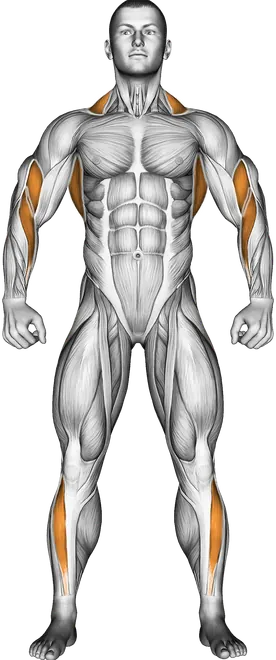
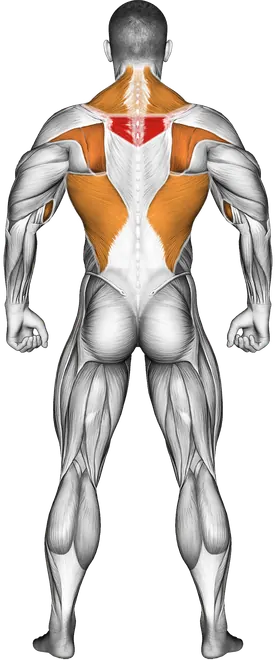
The Barbell Incline Row is a compound movement that trains the upper back with help from lats, tibialis, traps, biceps and forearms. This guide covers the setup, the execution, the mistakes worth fixing early, and how to program it.
Pulling a load toward your torso builds the upper back and everything that holds your shoulder blades in place, with lats, tibialis, traps, biceps and forearms assisting. Rows are the direct counterweight to all the pressing most people do, and they are what keeps shoulders healthy over years of training.
Who it is for. Everyone. Most people need at least as much rowing as pressing. It goes early in a pull or upper-body session.
Muscles worked
The prime mover here is the upper back, with lats, tibialis, traps, biceps and forearms assisting — which is why this movement earns its place as more than a single-muscle exercise.
How to do it
- Set your torso in position and hold it there — whatever angle the movement uses, it should not change during the set.
- Take a barbell and let your arms hang straight, allowing the shoulder blades to travel forward into a full stretch.
- Brace your midsection and set your lower back flat.
- Start the pull by drawing your shoulder blades together, then follow through by driving your elbows back past your torso.
- Pull until the load reaches your torso and hold the squeeze for a beat.
- Return slowly, letting the shoulder blades travel forward again into a full stretch before the next rep.
Breathing. Breathe out as you pull the load in, in as you return to the stretch.
Form cues that matter
- Lead with the elbows, not the hands.
- Shoulder blades move first, arms second.
- Let the weight stretch you at the bottom of every rep.
- Heaving with the lower back and hips
- Pulling with the arms and never moving the shoulder blades
Common mistakes
| The mistake | Do this instead |
|---|---|
| Heaving with the lower back and hips | Fix the torso angle and lighten the load until the back muscles do the work. |
| Pulling with the arms and never moving the shoulder blades | Start each rep by squeezing the blades together before the elbows bend. |
| Cutting the stretch short at the bottom | Let the arms straighten fully and the blades travel forward between reps. |
What makes this variation different
The Barbell Incline Row is a specific version of this movement, and the details in its name change how it should be performed.
- A barbell lets you load more weight than anything else and add it in small increments, which makes it the best tool for long-term strength progress. It also forces both sides to work together, so a stronger side can cover for a weaker one.
- The incline shifts the emphasis toward the upper portion of the muscle and the front of the shoulders. Somewhere around 30 degrees is usually the sweet spot — steeper turns it into a shoulder press.
Sets, reps and rest
| Goal | Sets | Reps | Rest |
|---|---|---|---|
| Strength | 3-5 | 5-8 | 90-180 s |
| Muscle growth | 3-4 | 8-15 | 90-180 s |
| Endurance | 2-3 | 15-20 | 90-180 s |
- 10-20Weekly sets
- 2-1-1Tempo
- 90-180 sRest
How to progress
Add weight before you add reps. Work at the top of your rep range for two sessions in a row with clean technique, then put the smallest increment available on the Barbell Incline Row and build back up. Small, boring jumps beat big ones.
Variations and alternatives
If you do not have the equipment, or you simply want to rotate the stimulus, these 8 movements train the upper back in a similar way.
- Barbell Bent Over Row — Barbell
- Barbell Reverse Grip Bent Over Row — Barbell
- Cable Seated Row — Cable
- Dumbbell One Arm Bent Over Row — Dumbbell
- Band Bent Over Row — Resistance band
- Band One Arm Twisting Seated Row — Resistance band
- Band Seated Row — Resistance band
- Band Standing Rear Delt Row — Resistance band
Safety
Key takeaways
- Lead with the elbows, not the hands.
- Shoulder blades move first, arms second.
- Work in the 8-15 rep range for muscle growth, leaving a rep or two in reserve on most sets.
- Full range of motion on the Barbell Incline Row matters more than the weight on it.
- Progress gradually and keep technique identical as the load goes up.
Go deeper
FAQ
What muscles does the Barbell Incline Row work?
It works the upper back as the prime mover, with lats, tibialis, traps, biceps and forearms assisting. The midsection also works throughout to keep you stable.
How many sets and reps should I do on the Barbell Incline Row?
Three to four working sets of 8-15 reps suits most people training for muscle growth, leaving one or two reps in reserve. Across all the exercises that train this muscle, 10-20 hard sets a week is a productive range.
Is the Barbell Incline Row good for beginners?
Yes, provided you start light enough to own the technique. Spend the first few weeks on the movement itself with a load you could do several more reps with, and add weight only once the pattern is automatic.
What can I do instead of the Barbell Incline Row?
Barbell Bent Over Row, Barbell Reverse Grip Bent Over Row and Cable Seated Row all train the upper back in a similar way, so any of them works as a substitute when the equipment is taken or you want to rotate the stimulus.
What equipment do I need for the Barbell Incline Row?
This version uses a barbell. The pattern matters more than the tool, though — the alternatives above cover the same movement with whatever you have available.
Track your sets, reps and progress on the Barbell Incline Row — free, with every exercise in the library.