
Getting Started · Beginner · 5 min read
Compound vs Isolation Exercises: What Is the Difference?
Every good program uses both. Compound exercises build the base because they train several muscles at once with heavy loads. Isolation exercises fill the gaps, add volume where you need it and make a single muscle work without the rest of the body getting in the way. The skill is knowing what each is for.
On this page
Compound exercises
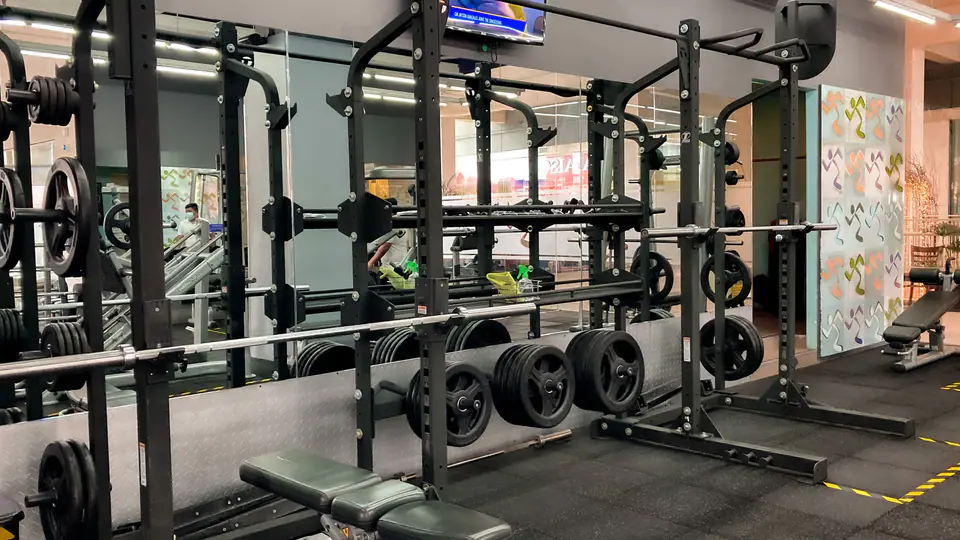
A compound exercise moves more than one joint and trains several muscles together. A squat bends the hips, knees and ankles and works the quads, glutes, adductors and trunk. A bench press moves the shoulder and elbow and trains chest, front delts and triceps. A row trains the lats, upper back, rear delts and biceps.
That is why compounds form the core of almost every program: they are time-efficient, they let you handle the heaviest loads, and they build strength you can use outside the gym. They are also the easiest lifts to track progress on, because small weekly gains add up to big numbers.
Isolation exercises
An isolation exercise moves one main joint and focuses on one target muscle: biceps curls (elbow), lateral raises (shoulder), leg curls (knee), calf raises (ankle). The loads are lighter, but the target muscle does nearly all the work.
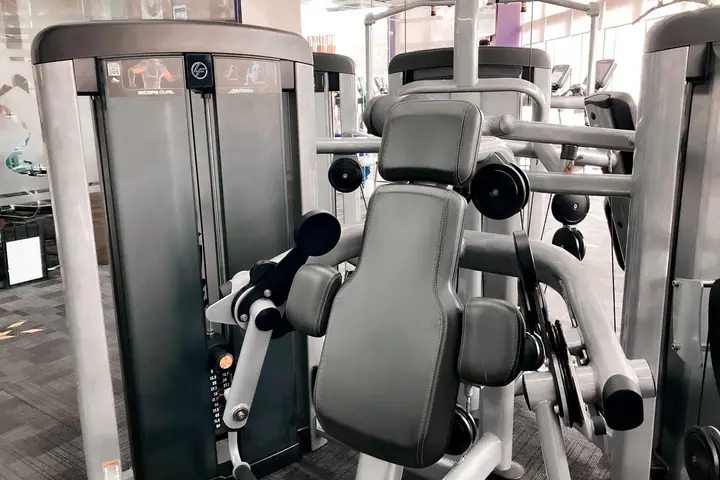
That precision is the point. In a bench press, the triceps may reach their limit before the chest does, or the other way round — you cannot choose. A cable flye or a triceps pressdown lets you decide exactly which muscle gets the hard sets, with far less whole-body fatigue than another round of heavy pressing.
Which builds more muscle?
Neither, on its own. Studies comparing compound-only and isolation-heavy programs mostly find similar growth when total hard sets are matched. What differs is where the growth happens.
| Compound | Isolation | |
|---|---|---|
| Joints moved | Two or more | One |
| Muscles trained | Several at once | One target muscle |
| Loads | Heavy | Light to moderate |
| Best for | Strength, efficiency, the base of a program | Weak points, arms, delts, calves, hamstrings |
| Fatigue per set | High — whole body | Low — local |
| Skill needed | More | Less |
Compounds under-train some muscles. Side delts get little from presses, hamstrings do not lengthen much in a squat, and the biceps and triceps are often the limiting muscles rather than the trained ones. That is why lifters who only do the big lifts often end up with strong numbers but lagging arms, shoulders and calves.
How to combine them
Put compound lifts first, while you are fresh and your technique is sharp, and isolation lifts after. A session might look like this:
- Barbell bench pressHeavy compound, 3 sets of 5 to 8
- Incline dumbbell pressSecond compound, 3 sets of 8 to 12
- Cable flyeChest isolation, 2 to 3 sets of 12 to 15
- Lateral raiseSide delts, 3 sets of 12 to 20
- Triceps pressdownTriceps isolation, 2 to 3 sets of 10 to 15
A simple rule of thumb: roughly two thirds of your sets on compounds and one third on isolation work suits most people. Beginners can lean further towards compounds; people chasing a particular look — bigger arms, rounder shoulders — can shift more towards isolation for the muscles they are bringing up. Our guide to building a workout program walks through the full structure.
Examples for every muscle
| Muscle | Compound | Isolation |
|---|---|---|
| Chest | Bench press, dips, push-ups | Cable or dumbbell flyes |
| Back | Rows, pull-ups, pulldowns | Straight-arm pulldown, reverse flye |
| Shoulders | Overhead press | Lateral raise, rear-delt flye |
| Quads | Squat, leg press, lunge | Leg extension |
| Hamstrings | Romanian deadlift | Lying or seated leg curl |
| Glutes | Hip thrust, deadlift | Cable kickback, hip abduction |
| Arms | Close-grip bench, chin-ups | Curls, pressdowns, extensions |
| Calves | — | Standing and seated calf raise |
The best exercise is not the one with the right label. It is the one that trains the target muscle hard, through a good range, with technique you can repeat every week. For more on choosing, see exercise selection for hypertrophy.
- Compound lifts train several muscles at once and build the base of strength.
- Isolation lifts target one muscle and add precise, low-fatigue volume.
- Matched for hard sets, both build muscle — they build it in different places.
- Do compounds first and isolation later; about two thirds compound suits most people.
- Side delts, arms, calves and hamstrings usually need direct isolation work.
Frequently asked questions
Can I build muscle with only compound lifts?
Yes, especially as a beginner. Over time most lifters benefit from isolation work too, because compounds under-train muscles like the side delts, calves, hamstrings and arms.
Are isolation exercises a waste of time?
No. They add direct volume to a muscle with little systemic fatigue and low injury risk, which makes them some of the most efficient exercises for muscle growth.
Should beginners do isolation exercises?
Yes, in small amounts. Two or three isolation movements after the main lifts — curls, lateral raises, leg curls — round out a beginner routine without taking time from learning the big lifts.
Is the deadlift a compound exercise?
Yes. It extends the hips and knees at once and trains the glutes, hamstrings, quads, back and grip. It is one of the most demanding compound lifts, which is why it is usually done early in a session with modest volume.
How many isolation exercises should I do per workout?
Two to four is typical. Enough to give the muscles your compounds miss some direct work, not so many that the session drags on or eats into recovery.
Related guides
Free Weights vs Machines: Which Is Better?
Free weights vs machines for building muscle and strength — the real pros and cons, what the research says, and how to use both for the best results.
Beginner · 3 min read
How to Build Your Own Workout Program
Build your own workout program step by step: pick a split, choose exercises, set volume and reps, plan progression and avoid the common mistakes.
Advanced · 3 min read
How to Choose the Best Exercises for Muscle Growth
How to choose the best exercises for muscle growth: the four tests a good exercise passes, how many you need per muscle, and when to swap them out.
Advanced · 4 min read
How to Start Lifting Weights: A Complete Beginner Guide
A step-by-step beginner guide to lifting weights: what to do on day one, how to build your first routine, how to progress and how to stay safe.
Beginner · 6 min read
This guide is general educational information, not medical advice. Train within your ability and consult a qualified professional before starting a new program if you have an injury or health condition.