Muscle Growth · Advanced · 4 min read
How to Choose the Best Exercises for Muscle Growth
There is no single best exercise for any muscle, but there are clearly better and worse choices for you. A good hypertrophy exercise lets the target muscle — not your balance, grip or lower back — decide when the set ends, loads it through a long range, and can be progressed for months. Pick a few that pass those tests and keep them.
On this page
The four tests
- The target muscle limits the set, not a smaller helper or your balance
- It loads the muscle in a long, stretched position
- It is stable enough to push within a rep or two of failure safely
- It can be progressed in small steps of reps or load
- It feels good on your joints, week after week
- It looks impressive but your grip or lower back gives out first
- Every rep feels different because balance is the challenge
- The weight jumps are too big to progress
The target muscle should limit the set
This is the test most people miss. If your lower back tires before your lats on a bent-over row, your lats never reached a hard set. Swap to a chest-supported row and suddenly they can. If your triceps give out on dips before your chest is challenged, that is a triceps exercise for you — useful, but not your chest builder.
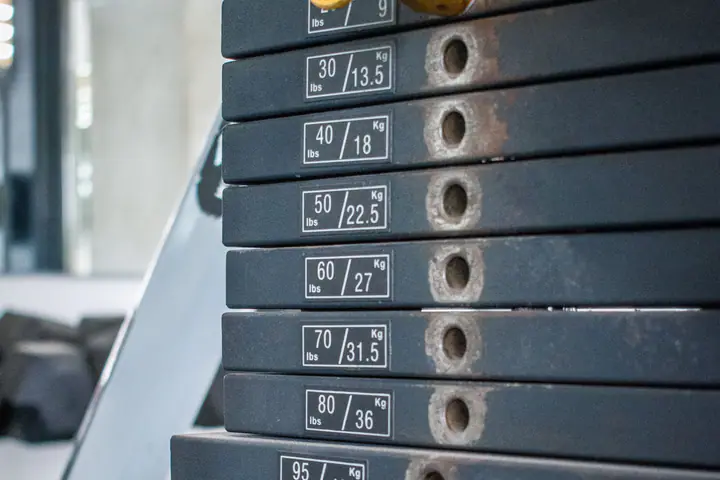
Ask after each set: what stopped me? If the answer is not the muscle you were training, change the exercise, the setup or the equipment. Straps for pulling, a supported version for rows, a machine instead of a free weight — these are not shortcuts, they are ways to put the tension where it belongs. See mechanical tension for why this matters so much.
Stable enough to push, long enough to stretch
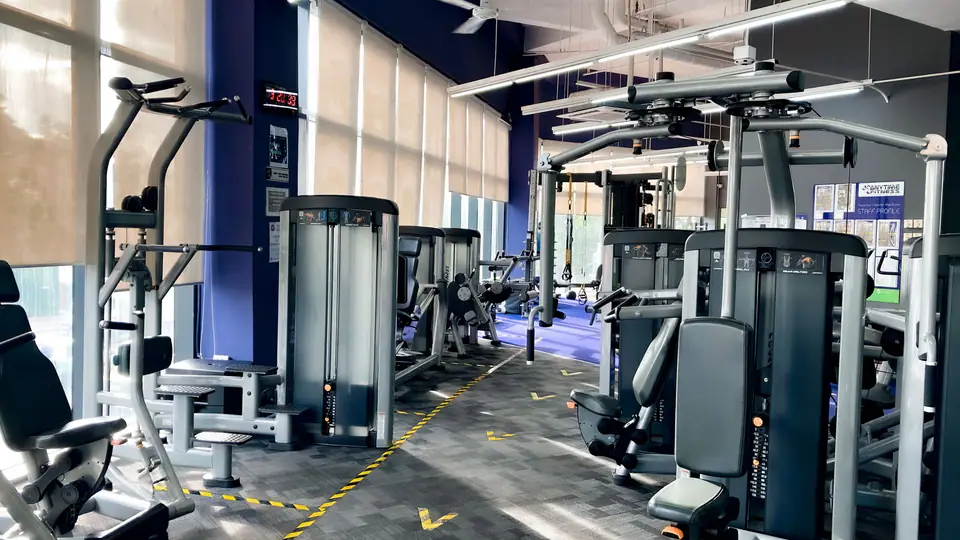
Unstable exercises have their place — for athletes, balance and joint robustness. For pure muscle growth, stability usually wins, because you can take a stable exercise closer to failure without technique or safety breaking down first. That is why machines, cables and supported dumbbell variations are so effective for hypertrophy.
Range matters too. Recent research points to the stretched part of a movement as especially productive: incline curls, overhead triceps extensions, deep dumbbell presses, Romanian deadlifts, seated leg curls and deep squats all load muscles long. Our guide to full range of motion goes into the research.
How many exercises per muscle
You need far fewer than most programs use. A small menu covers everything:
| Role | What it is | Chest example | Back example |
|---|---|---|---|
| Heavy compound | Your main strength and mass builder | Bench press | Pull-up or pulldown |
| Stable variation | A machine or dumbbell move you can push hard | Machine or dumbbell press | Chest-supported row |
| Stretch-focused | Loads the muscle long | Cable or dumbbell flye | Single-arm cable row |
Two to four exercises per muscle across the week is enough. More variety spreads your sets thinly across movements you never get good at, which makes progressive overload almost impossible to track.
When to change exercises
Keep good exercises for six to twelve weeks — long enough to progress them properly. Then swap when you have a reason:
- It still progresses and feels goodKeep itThere is no prize for variety.
- It hurts your joints despite good formChange it nowDifferent angle, grip or equipment.
- Progress has stalled for 4 or more weeksSwap for a close variationIncline for flat, dumbbell for barbell.
- You are bored and training less hardRotate one exerciseMotivation is a real reason.
Swapping a variation for a close cousin keeps most of your progress while giving joints and motivation a fresh start. For the bigger picture of how exercises fit into a week, see compound vs isolation exercises and free weights vs machines.
- Choose exercises where the target muscle, not grip or balance, ends the set.
- Favour stable exercises that load the muscle in a long, stretched position.
- Two to four exercises per muscle across the week is enough.
- Keep good exercises for six to twelve weeks so you can progress them.
- Swap when a movement hurts, stalls for a month, or kills your motivation.
Frequently asked questions
Are machines good for hypertrophy?
Yes. Machines are often excellent because they are stable, safe to take close to failure and easy to progress one plate at a time.
How many exercises per muscle do I need?
Usually two to four across the week. More can work, but too much variety makes progression hard to track.
Should I change exercises often to "confuse" the muscle?
No. Muscles respond to tension and progression, not surprise. Keep exercises for six to twelve weeks, then swap if joints or motivation call for it.
Are free weights better than machines for muscle growth?
Neither is better overall. Studies find similar growth when effort and volume are matched. Free weights build more coordination and strength carry-over; machines make it easier to isolate and push close to failure.
What if I do not feel the target muscle working?
Lighten the load, slow the lowering, and check what is limiting the set. If you still feel another muscle doing the work, try a more stable or supported variation.
Related guides
Compound vs Isolation Exercises: What Is the Difference?
Compound vs isolation exercises explained: which builds more muscle and strength, how to order them in a workout, and examples for every muscle group.
Beginner · 5 min read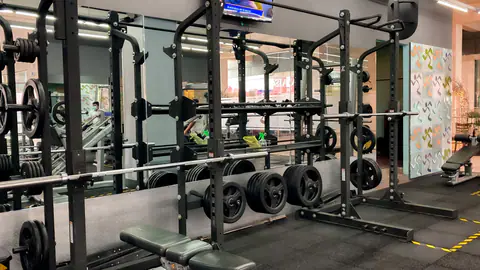
Free Weights vs Machines: Which Is Better?
Free weights vs machines for building muscle and strength — the real pros and cons, what the research says, and how to use both for the best results.
Beginner · 3 min read
Training Volume for Muscle Growth: How Many Sets?
How many sets per muscle per week build the most muscle? A practical guide to training volume, the optimal range, and how to add volume without overtraining.
Advanced · 4 min read
How to Build Muscle: The Complete Hypertrophy Guide
How to build muscle, explained simply: the three drivers of growth, how much to train and eat, how fast you can gain, and the mistakes to avoid.
Beginner · 5 min read
This guide is general educational information, not medical advice. Train within your ability and consult a qualified professional before starting a new program if you have an injury or health condition.