
Strength & Power · Intermediate · 4 min read
Grip Strength for Lifters
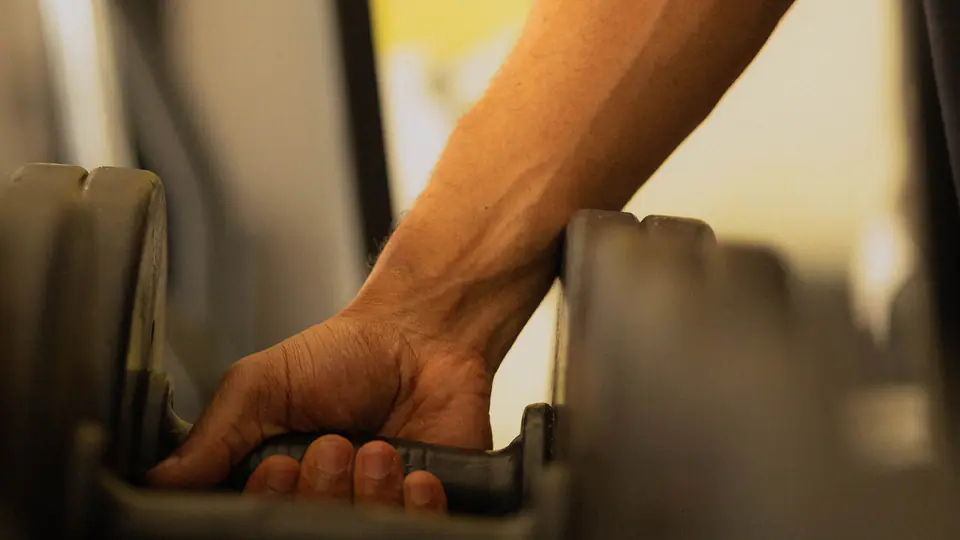
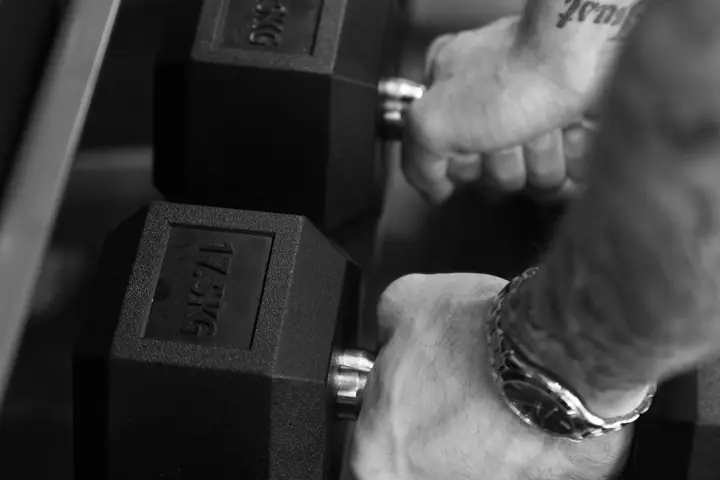
Grip is the handshake between you and the weight. When it fails, the set ends — no matter how much your back or legs had left. The good news: grip responds fast to direct training, and a few minutes twice a week is enough to stop it limiting your deadlifts, rows and pull-ups.
On this page
The three types of grip
| Type | What it is | Where lifters use it | How to train it |
|---|---|---|---|
| Support | Holding a weight without letting go | Deadlifts, rows, carries, pull-ups | Farmer carries, heavy holds, hangs |
| Crush | Closing the hand hard | Handshakes, grippers, strongman | Grippers, towel pull-ups |
| Pinch | Thumb against fingers | Holding plates, climbing | Plate pinches, block holds |
Support grip is the priority for almost everyone who lifts. Crush and pinch grip matter for specific sports and add some general hand strength, but they are optional extras.
The best grip exercises
- Dead hang3 × 20 to 45 s from a bar
- Farmer carry3 × 30 to 40 m with heavy dumbbells
- Double-overhand barbell hold3 × 10 to 20 s, heavier than your deadlift top set
- Towel pull-up or towel row3 sets of a few hard reps
- Thick-handle or fat-grip holdsShort, heavy efforts
Start with short, heavy holds and add a few seconds or a little weight each week. Farmer carries are especially good value: they train grip, traps, core and conditioning at the same time.
How to program it
Grip work belongs at the end of a session, so it never tires your hands before heavy pulling. Two or three short sessions a week is plenty — often just two exercises for two or three sets each.
- End of the session, after your main pulls
- Two or three times a week, 5 to 10 minutes
- Warm up your deadlifts double overhand for as long as you can
- Progress hold times and weights gradually
- Grip work before heavy deadlifts or rows
- Daily high-volume gripper sessions
- Training through elbow or forearm pain
Grip muscles recover quickly, but the tendons at the elbow do not. If your elbows start to ache, cut the volume by half for a couple of weeks.
Chalk and straps
Chalk dries your hands and cuts slipping — often worth a few kilograms on heavy pulls. Use it wherever your gym allows.
Straps let your back and hips train hard even when grip would end the set first. They are a tool, not cheating: use them on lighter volume sets, rows and Romanian deadlifts, and keep your heaviest deadlift sets strapless so your grip keeps up. For the full deadlift picture, see how to increase your deadlift.
Grip also improves naturally as you get stronger. Pull-ups, heavy rows and deadlifts all train it, so for many people a little direct work is enough to close the gap. If you want bigger forearms as well as a stronger grip, see how to build bigger forearms.
- Support grip — holding heavy things — matters most for lifters.
- Farmer carries, heavy holds and dead hangs are the best grip builders.
- Train grip at the end of a session, two or three times a week.
- Use chalk where allowed; use straps for volume, not every heavy set.
- Back off if elbows ache — tendons recover slower than muscles.
Frequently asked questions
How often should I train grip?
Two or three short sessions a week works well. Grip muscles recover quickly, but elbow tendons can get irritated if you do too much too soon.
Do pull-ups build grip?
Yes, especially dead hangs and high-rep pull-ups. Farmer carries and heavy barbell holds add more direct overload.
Should I use mixed grip on deadlifts?
Mixed grip helps with heavy deadlifts, but alternate which hand faces up and never yank with the underhand arm. Hook grip or straps are alternatives.
Are grip trainers and grippers worth it?
They train crush grip, which matters less for most lifters than support grip. They are fine as an extra, but carries and holds carry over better to lifting.
Why does my grip fail on deadlifts but not rows?
Deadlifts use much heavier loads, and the bar can roll open your fingers. Chalk, a mixed or hook grip, and heavy double-overhand holds all help.
Related guides
How to Increase Your Deadlift
How to increase your deadlift: a better start position, fixing where the bar slows, building the posterior chain and grip, and how often to pull heavy.
Intermediate · 4 min read
Pull-Ups and Rows: How to Build a Strong Back
How to do pull-ups and rows with proper form: grip, scapular control, full range of motion, and the mistakes that turn back exercises into arm exercises.
Beginner · 4 min read
Deadlift Form: How to Deadlift Safely and Strongly
How to deadlift with proper form: setup, neutral back, bracing, bar path and lockout, plus the common mistakes that cause back pain.
Beginner · 4 min read
Compound vs Isolation Exercises: What Is the Difference?
Compound vs isolation exercises explained: which builds more muscle and strength, how to order them in a workout, and examples for every muscle group.
Beginner · 5 min read
This guide is general educational information, not medical advice. Train within your ability and consult a qualified professional before starting a new program if you have an injury or health condition.