
Bird Dog
The Bird Dog is a compound movement that trains the glutes with help from lower back, front delts and hamstrings. This guide covers the setup, the execution, the mistakes worth fixing early, and how to program it.
Holding a position against a force that wants to bend you is the everyday job of the glutes. Training that directly builds the bracing strength that keeps your spine safe under a heavy squat or deadlift, and it costs almost nothing to recover from.
Who it is for. Everyone, and especially anyone who lifts heavy. Program it at the end of a session or as part of a warm-up.
Muscles worked
The prime mover here is the glutes, with lower back, front delts and hamstrings assisting — which is why this movement earns its place as more than a single-muscle exercise.
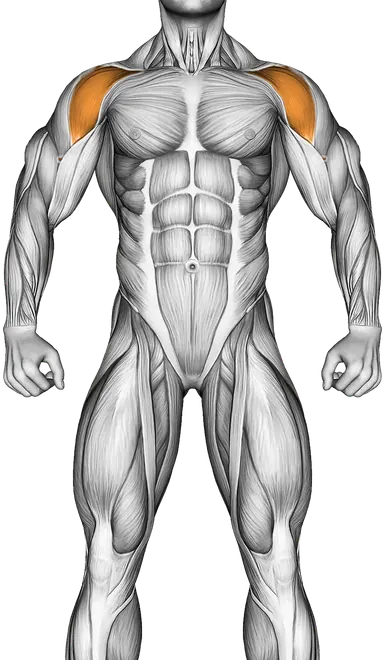 Front
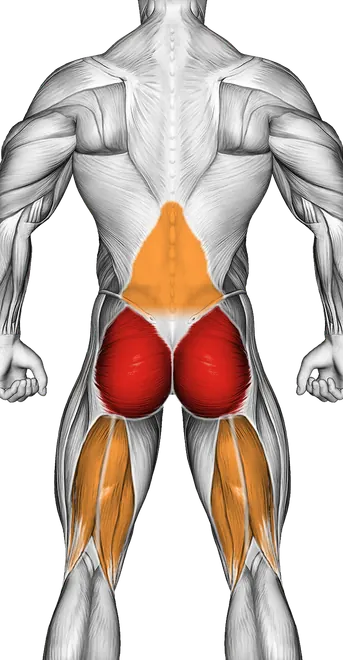 Back
- Gluteus maximus100%
- Front delts50%
- Spinal erectors50%
- Biceps femoris50%
- Semitendinosus50%
How to do it
- Get into position with your body in one straight line from head to heels.
- Set your shoulder blades wide and push the floor away rather than letting your chest sag between them.
- Tuck your pelvis slightly so your lower back is flat, and squeeze your glutes.
- Brace the glutes hard and hold the line, breathing shallowly but steadily.
- Resist the urge to let the hips drift up or sag down as the hold gets difficult.
- End the set when your form breaks, not when the clock says so.
Breathing. Breathe shallowly and continuously through the hold. Holding your breath spikes your blood pressure and shortens the set.
Form cues that matter
- One straight line from ears to heels.
- Squeeze your glutes — it locks the pelvis in place.
- Quality over duration; stop when the line breaks.
- Letting the hips sag and the lower back arch
- Hiking the hips up to make it easier
Common mistakes
| The mistake | Do this instead |
|---|---|
| Letting the hips sag and the lower back arch | Tuck the pelvis, squeeze the glutes, and shorten the hold. |
| Hiking the hips up to make it easier | Lower them back into line and accept a shorter set. |
| Chasing longer and longer holds | Add resistance or a harder variation instead; past about a minute you are training patience, not the muscle. |
What makes this variation different
The Bird Dog is a specific version of this movement, and the details in its name change how it should be performed.
- Using only your bodyweight means you can train anywhere, and it keeps the whole body involved in stabilising the movement. Progress comes from leverage, range and reps rather than from adding plates.
Sets, reps and rest
| Goal | Sets | Reps | Rest |
|---|---|---|---|
| Strength | 3-5 | 20-30 s | 45-75 s |
| Muscle growth | 3-4 | 30-60 s | 45-75 s |
| Endurance | 2-3 | 60-120 s | 45-75 s |
- 4-12Weekly sets
- holdTempo
- 45-75 sRest
How to progress
Add time or difficulty rather than load. Once you can hold the position cleanly for the top of the range, progress to a harder variation or add external resistance instead of simply holding longer.
Variations and alternatives
If you do not have the equipment, or you simply want to rotate the stimulus, these 8 movements train the glutes in a similar way.
- Front Plank — Bodyweight
- Wheel Rollout — Bodyweight
- Band Assisted Wheel Rollout — Resistance band
- Barbell Rollout — Barbell
- Barbell Standing Ab Rollout — Barbell
- Dead Bug — Bodyweight
- Dead Bug (Version 2) — Bodyweight
- Dead Bug with Stability Ball — Bodyweight
Safety
Key takeaways
- One straight line from ears to heels.
- Squeeze your glutes — it locks the pelvis in place.
- Work in the 30-60 s rep range for muscle growth, leaving a rep or two in reserve on most sets.
- Full range of motion on the Bird Dog matters more than the weight on it.
- Progress gradually and keep technique identical as the load goes up.
Go deeper
FAQ
What muscles does the Bird Dog work?
It works the glutes as the prime mover, with lower back, front delts and hamstrings assisting. The midsection also works throughout to keep you stable.
How many sets and reps should I do on the Bird Dog?
Three to four working sets of 30-60 s reps suits most people training for muscle growth, leaving one or two reps in reserve. Across all the exercises that train this muscle, 4-12 hard sets a week is a productive range.
Is the Bird Dog good for beginners?
Yes, provided you start light enough to own the technique. Spend the first few weeks on the movement itself with a load you could do several more reps with, and add weight only once the pattern is automatic.
What can I do instead of the Bird Dog?
Front Plank, Wheel Rollout and Band Assisted Wheel Rollout all train the glutes in a similar way, so any of them works as a substitute when the equipment is taken or you want to rotate the stimulus.
What equipment do I need for the Bird Dog?
This version uses your bodyweight. The pattern matters more than the tool, though — the alternatives above cover the same movement with whatever you have available.
Track your sets, reps and progress on the Bird Dog — free, with every exercise in the library.