
Muscle-Group Guides · Intermediate · 4 min read
How to Build Bigger Calves
Calves have a reputation as the muscle that will not grow. Genetics play a part, but for most lifters the bigger problem is how calves get trained: a few rushed, bouncing sets at the end of leg day, with whatever weight is on the machine. Train them like a real muscle — full range, hard sets, tracked progress — and they respond.
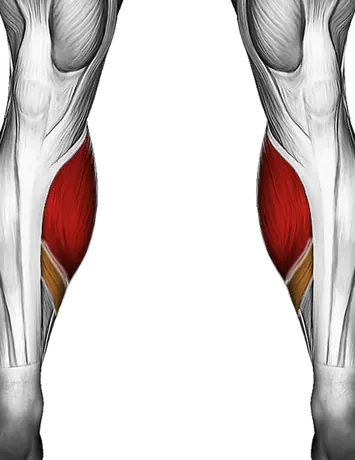 Front
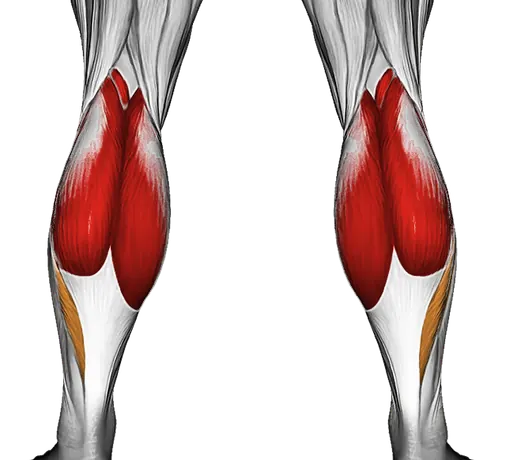 Back
- Gastrocnemius100%
- Soleus49%
On this page
Train both calf muscles
The calf is two main muscles, and knee angle decides which one works:
| Standing calf raise | Seated calf raise | |
|---|---|---|
| Knee position | Straight | Bent to 90 degrees |
| Main muscle | Gastrocnemius — the visible "diamond" | Soleus — the wide muscle underneath |
| What it builds | Shape and height of the calf | Width and thickness, especially from the side |
| Typical load | Heavier | Lighter |
Most people only do the standing version, which leaves the soleus — often the larger of the two — under-trained. Use both if bigger calves are the goal.
Full range, with a pause
Range is where calf training is won or lost. The Achilles tendon is springy; if you bounce at the bottom, it does much of the work, and the muscle barely has to.
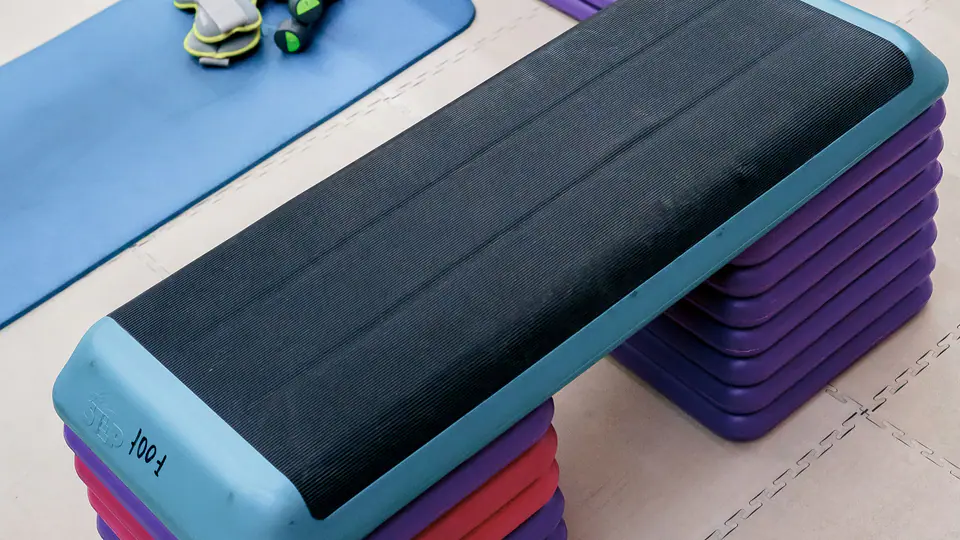
- Stand with the balls of your feet on a step or platform, heels hanging off.
- Lower slowly until your heels are as low as they can go — a deep calf stretch.
- Pause there for one to two seconds, fully relaxed into the stretch.
- Rise as high as possible onto the balls of your feet, pushing through the big toe.
- Squeeze for a moment at the top, then lower slowly again.
Research on calves supports this: training the calves through the stretched range appears to be especially effective. The pause at the bottom removes the bounce and makes the muscle do the work.
Volume and frequency
Calves are used to walking all day, so they tolerate frequent training and recover quickly.
- MonUpper
- TueLowerStanding raise 4 × 8–12, paused
- WedRest
- ThuUpperSeated raise 3 × 15–20, to finish
- FriLowerSeated raise 3 × 12–15, then standing 2 × 20
- SatRest
- SunRest
That is 12 hard sets across three sessions — a good target for most people. Train them first on one of those days now and then, when you are fresh, rather than always tacking them on at the end.
Progress them like a main lift
The most common reason calves stay small is that they are never progressed. Log your calf raises: the weight, the reps and the pause. Add reps until you reach the top of the range with full, paused reps, then add weight.
- Deep, paused stretch at the bottom of every rep
- Full rise onto the balls of the feet
- Both standing and seated raises
- Logged and progressed every week
- Bouncing out of the bottom
- Half reps with the whole stack
- Random weight, random sets, at the end of leg day
If calves are your weak point, a six-to-ten-week specialization phase with calves trained three or four times a week is the most reliable fix.
How much do genetics matter?
Genetics shape where the calf muscle attaches — high or low on the leg — which affects how big the calves can look. Some people will always have a longer tendon and a higher muscle belly. That is real.
But genetics rarely explain small calves on their own. Far more often it is poor range, too little volume, and no progression. Train them properly for six months before you decide they will not grow. For how calves fit into a complete leg day, see how to build bigger legs and full range of motion.
- Standing raises train the gastrocnemius; seated raises train the soleus — do both.
- Use a deep, paused stretch at the bottom and never bounce.
- Aim for 8 to 16 hard sets a week over two to four sessions.
- Mix 8 to 12 and 15 to 25 reps, taken close to failure.
- Log and progress calf raises like a main lift.
Frequently asked questions
Are calves mostly genetic?
Genetics affect how big they can look, but training matters a lot. Many lifters under-train calves or use a bouncing half range.
Should calf reps be high?
High reps work well, but include some moderate, heavier sets too. The key is hard sets through a full, paused range.
Can walking build calves?
Walking is healthy but usually too easy to build large calves in trained people. Progressive calf raises work much better.
Can I train calves every day?
They recover quickly, but daily training rarely beats three or four focused sessions a week. Quality sets matter more than frequency.
What if I do not have a calf raise machine?
Do single-leg calf raises on a step holding a dumbbell, or use the leg press sled for heavy calf raises. A bent-knee version with a dumbbell on your knee trains the soleus.
Related guides
How to Build Bigger Legs
How to build bigger legs: training quads, hamstrings and calves, the best leg exercises, why you should not skip leg day, and how to progress.
Intermediate · 3 min read
Full Range of Motion: Why It Matters for Muscle and Strength
Why full range of motion builds more muscle: what research says about the stretched position, when partial reps help, and how to improve depth safely.
Beginner · 5 min read
Training Volume for Muscle Growth: How Many Sets?
How many sets per muscle per week build the most muscle? A practical guide to training volume, the optimal range, and how to add volume without overtraining.
Advanced · 4 min read
Specialization Phases: How to Bring Up Weak Muscles
Specialization phases: how to bring up a weak muscle by raising its volume and frequency for 6 to 10 weeks while holding everything else at maintenance.
Advanced · 4 min read
This guide is general educational information, not medical advice. Train within your ability and consult a qualified professional before starting a new program if you have an injury or health condition.