
Muscle-Group Guides · Intermediate · 4 min read
How to Build Bigger Shoulders
Broad, capped shoulders change how your whole upper body looks — they make the waist look narrower and the frame look wider. Most lifters under-build them for one simple reason: they press a lot and assume that covers it. It does not. Width comes from the side delts, and they need their own work.
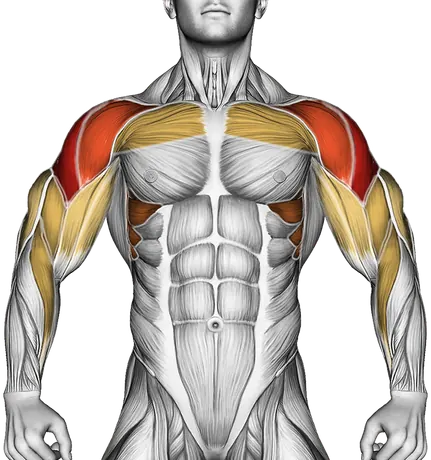 Front
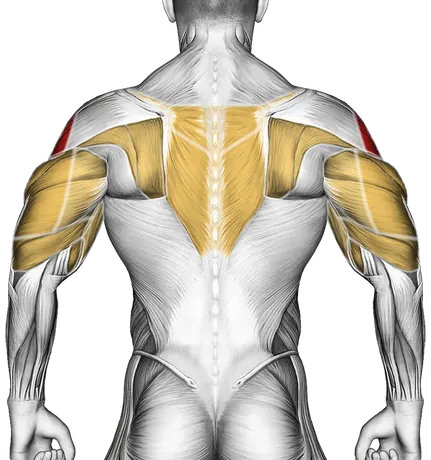 Back
- Side delts100%
- Front delts80%
- Serratus60%
On this page
Train all three heads
The deltoid has three parts, each with a different job:
| Head | Job | Gets work from | Needs direct work? |
|---|---|---|---|
| Front | Raises the arm forward | Every press: bench, incline, overhead | Rarely |
| Side | Raises the arm out to the side — this is width | Almost nothing else | Yes, always |
| Rear | Pulls the arm back | Rows and pulldowns, partly | Usually |
The front delts are usually well trained from pressing alone. The side delts are what make shoulders look wide, and presses barely touch them. The rear delts round out the back of the shoulder and help keep your shoulders healthy under heavy pressing.
The best shoulder exercises
- Overhead press or seated dumbbell press: heavy compound work for the front delts, triceps and overall pressing strength. See overhead press form.
- Cable lateral raise: the best side-delt builder for many people, because the cable keeps tension on the muscle at the bottom, where dumbbells go slack.
- Dumbbell or machine lateral raise: simple, effective and easy to progress with reps.
- Reverse pec deck or rear-delt flye: direct rear-delt work.
- Face pull: rear delts plus the upper back and rotator cuff.
Two to four of these, done consistently, build more shoulder than a rotating menu of ten.
Volume, reps and frequency
Delts recover quickly and respond well to frequent, moderate-to-high-rep work. A week that builds shoulders might look like this:
Spread the side-delt sets across two to four sessions — three sets of lateral raises on each upper day works well. Use 10 to 25 reps on raises, and take them close to failure; the last few reps are where the growth happens. Pressing sets count toward front-delt volume, which is why they need so few direct sets.
If shoulders are your priority, a six-to-ten-week specialization phase can push side-delt volume higher while everything else holds steady.
Lateral raise technique
- Stand tall with a light dumbbell in each hand, arms slightly bent.
- Lean forward just a little from the hips.
- Raise the dumbbells out to the sides, leading with your elbows, not your hands.
- Stop at about shoulder height, with your little finger roughly level with your thumb.
- Lower slowly — about two to three seconds — to just short of your thighs.
- Light enough to control every rep for 12 to 20
- Lead with the elbows, shoulders down away from the ears
- Slow, controlled lowering
- Swinging the weight up with your hips
- Shrugging — it turns the raise into a traps exercise
- Going so heavy that you only move the dumbbells a few centimetres
If you feel your traps more than your shoulders, the weight is too heavy or you are shrugging. Go lighter and think about pushing the dumbbells out to the walls rather than up to the ceiling.
Common mistakes
The three mistakes that keep shoulders small are relying on pressing alone, ego-lifting lateral raises with momentum, and neglecting the rear delts entirely.
The fix is not complicated: add side-delt work two to four times a week, use weights you can control, and balance every press with a pull. That balance matters for health as much as looks — shoulders that only press tend to round forward and ache. For how shoulders fit a full upper-body plan, see the upper/lower split, and for the muscle-building principles behind it, how to build muscle.
- Pressing trains the front delts; width comes from the side delts.
- Train side delts with lateral raises two to four times a week.
- Add rear-delt work twice a week for a full, healthy shoulder.
- Aim for 12 to 20 weekly sets across all heads, mostly 10 to 25 reps.
- Use light, controlled raises that lead with the elbows — no shrugging.
Frequently asked questions
How often should I train shoulders?
Two to four times a week works well, especially for the side and rear delts, which recover quickly from isolation work.
Are lateral raises necessary?
For maximum shoulder width, yes. Pressing alone usually under-trains the side delts, which are what make shoulders look wide.
Why do I feel my traps during lateral raises?
The weight is probably too heavy or you are shrugging. Use lighter dumbbells, keep your shoulders down and lead with the elbows.
Is the overhead press enough for shoulders?
It builds the front delts and pressing strength very well, but adds little to the side and rear delts. Pair it with raises and rear-delt work.
Cables or dumbbells for lateral raises?
Both work. Cables keep tension on the muscle at the bottom of the rep, which many people find more effective; dumbbells are simpler and available everywhere. Use either, or both.
Related guides
Overhead Press Form: How to Press Overhead Safely
How to do the overhead press with proper form: grip, bracing, bar path around the head, and the mistakes that limit your press and strain the shoulders.
Beginner · 3 min read
Specialization Phases: How to Bring Up Weak Muscles
Specialization phases: how to bring up a weak muscle by raising its volume and frequency for 6 to 10 weeks while holding everything else at maintenance.
Advanced · 4 min read
Dumbbell Press Form: Chest and Shoulder Technique
Dumbbell bench press form, flat and incline: how to get heavy dumbbells into position, elbow angle, how deep to go, common mistakes and how to progress.
Beginner · 4 min read
How to Build Muscle: The Complete Hypertrophy Guide
How to build muscle, explained simply: the three drivers of growth, how much to train and eat, how fast you can gain, and the mistakes to avoid.
Beginner · 5 min read
This guide is general educational information, not medical advice. Train within your ability and consult a qualified professional before starting a new program if you have an injury or health condition.