
Lifting Technique · Beginner · 4 min read
How to Get Your First Pull-Up
Your first pull-up is one of the best milestones in strength training. It takes back and arm strength, grip, body control and practice with the actual movement — and every one of those can be trained. With a clear progression, most people get there in a matter of weeks to a few months.
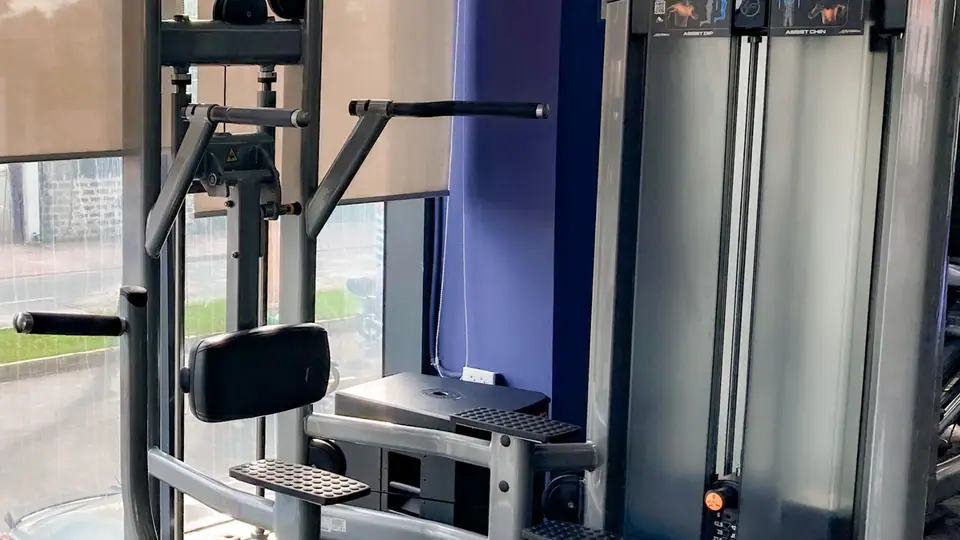
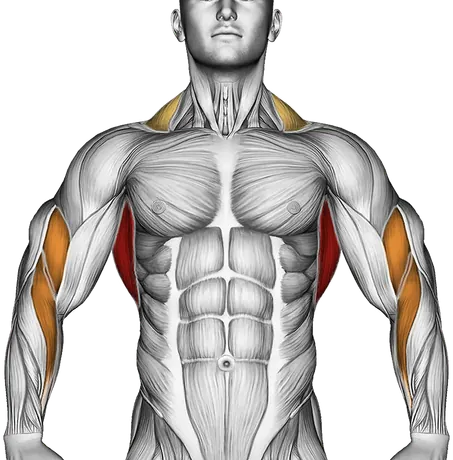 Front
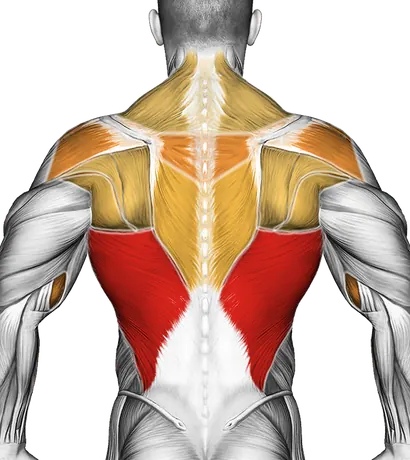 Back
- Latissimus100%
- Teres major25%
- Rear delts50%
- Middle traps50%
- Brachialis50%
- Brachioradialis50%
- Lower traps33%
On this page
What it takes
A pull-up is simply lifting your own bodyweight with your back and arms. Two things decide how hard that is: how strong your pulling muscles are, and how much you weigh. Both can move in your favour. Most people are closer than they think — a lat pulldown of around 70 to 80 percent of bodyweight for several clean reps usually means a first pull-up is near.
The building blocks
| Assisted pull-ups | Lat pulldowns | |
|---|---|---|
| What it trains | The exact movement, body control | The pulling muscles, with precise loading |
| Progression | Less assistance each week | More weight on the stack |
| Best for | Skill and strength together | Building raw pulling strength |
| Watch out for | Bands help most at the bottom | Leaning back turns it into a row |
You need both. The machine-assisted pull-up (or a band looped over the bar) lets you practise the real thing through a full range. The pulldown builds strength with fine-tuned weight jumps. Add rows once or twice a week for the upper back, dead hangs for grip, and some curls — the biceps do more work in a pull-up than most people expect.
Negatives, done right
Negatives train the lowering phase, where you are strongest. Step or jump to the top with your chin over the bar, then lower yourself as slowly as you can — aim for three to five seconds — to a dead hang.
They work, but they are also very demanding and cause a lot of soreness. Use 3 to 5 quality negatives at the end of a session, not sets of ten. When a negative lasts under two seconds, you are done for the day.

A simple progression
- Weeks 1–2Pulldowns 3 × 8–12, assisted pull-ups 3 × 6–8, dead hangs 3 × 20–30 s
- Weeks 3–4Same, with a little less assistance and slightly heavier pulldowns
- Weeks 5–6Add 3 to 5 slow negatives at the end of two sessions a week
- Weeks 7–8Minimal assistance; negatives lasting 5 seconds or more
- Week 9Test a real pull-up on a fresh day
Train this two or three times a week on non-consecutive days — for example as part of your upper-body days. Log the assistance level and pulldown weight every session, so you can see the gap closing.
How to test, and what comes next
Test fresh, at the start of a session, never after a hard back workout. Start from a dead hang with arms straight, brace your trunk, squeeze the bar, and drive your elbows down toward your ribs until your chin clears the bar.
If you do not get it, you have not failed — you have a baseline. Keep training and retest in two or three weeks. Once you have one rep, build to sets of three to five by doing several single reps with rest (for example, five singles with a minute between), then connect them.
A chin-up (palms facing you) is usually a little easier than a pull-up, and a great first target. After that, see pull-ups and rows and the lat pulldown guide for building a stronger back.
- Train vertical pulling two or three times a week.
- Combine assisted pull-ups for skill with pulldowns and rows for strength.
- Add 3 to 5 slow negatives, not endless sets of them.
- Reduce assistance gradually and log it every session.
- Test when fresh every two to three weeks; a chin-up is a great first goal.
Frequently asked questions
Are resistance bands good for learning pull-ups?
Yes, but they help most at the bottom, where you are strongest, and least at the top, where you are weakest. An assisted pull-up machine lets you progress more precisely.
How long does it take to get a first pull-up?
It depends on your starting strength and bodyweight. With consistent training, many people get there in six to twelve weeks; some need a few months. Losing a little body fat speeds it up too.
Do lat pulldowns carry over to pull-ups?
Yes. They build the same muscles, and strength on the pulldown tracks closely with pull-up ability. You still need some pull-up practice to learn to move your own body.
Is a chin-up easier than a pull-up?
Usually, yes. The underhand grip brings the biceps in more, so most people can do a chin-up before a pull-up.
Should I do pull-ups every day?
No. Two or three sessions a week with rest in between builds strength faster than daily attempts, which mostly build fatigue and sore elbows.
Related guides
Pull-Ups and Rows: How to Build a Strong Back
How to do pull-ups and rows with proper form: grip, scapular control, full range of motion, and the mistakes that turn back exercises into arm exercises.
Beginner · 4 min read
Lat Pulldown Form: How to Train Your Back Properly
Lat pulldown form, step by step: setup, grip width, how to pull with your elbows, how far to lean, common mistakes and how to finally feel your lats working.
Beginner · 4 min read
Grip Strength for Lifters
Grip strength for lifters: the three types of grip, the best exercises to train them, how to program grip work, and when to use chalk and straps.
Intermediate · 4 min read
How to Build a Wider, Thicker Back
How to build a bigger back: training for width and thickness, the best vertical and horizontal pulling exercises, ideal volume, and common mistakes.
Intermediate · 3 min read
This guide is general educational information, not medical advice. Train within your ability and consult a qualified professional before starting a new program if you have an injury or health condition.