
Lifting Technique · Beginner · 4 min read
Leg Press Form: Quads, Glutes and Safe Depth
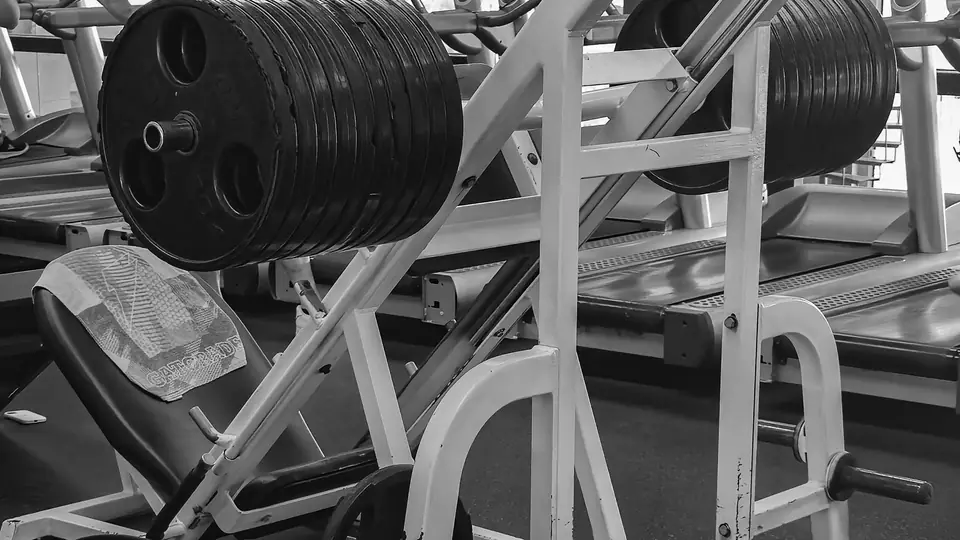
The leg press is one of the best machines for building legs. It is stable, it takes balance and the lower back out of the equation, and it lets you push sets hard and close to failure safely. Good form keeps all that stress on the quads and glutes, where you want it, and away from the lower back and knees.
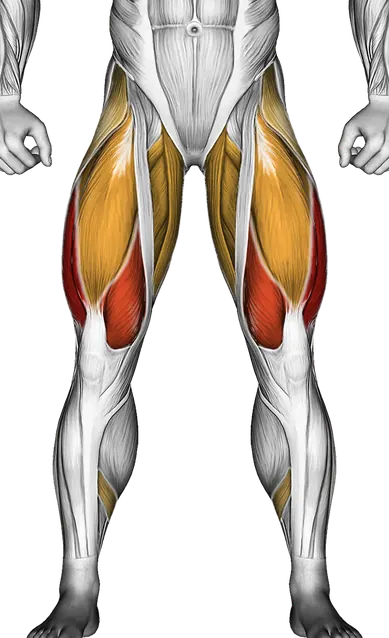 Front
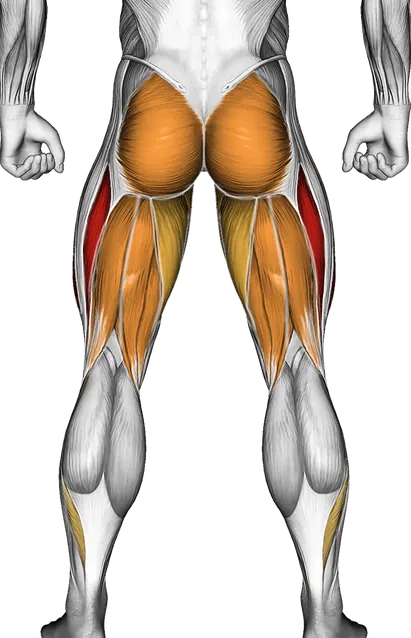 Back
- Vastus lateralis100%
- Vastus medialis82%
- Rectus femoris40%
- Gluteus maximus50%
- Biceps femoris50%
- Semitendinosus50%
- Adductors33%
On this page
Setup
- Adjust the seat back so you can reach a deep knee bend without your hips curling.
- Sit all the way back: hips and lower back flat against the pad.
- Place your feet shoulder-width apart, mid-platform, toes turned out slightly.
- Press the sled up, release the safety handles, and grip the side handles.
The seat angle matters more than most people realise. A seat reclined too far lets the pelvis tuck under early; if you run out of depth quickly, try a more upright setting.
Depth and knee path
Lower the sled for about two seconds until your knees are deeply bent — often around 90 degrees or a little past — but stop before your hips lift off the pad. That point, where the lower back starts to round, is your depth for today.
- Hips and lower back glued to the pad
- Knees track in the same direction as the toes
- Controlled two-second lowering, no bouncing
- Press through the whole foot, heels down
- Going so deep your pelvis tucks and lower back rounds
- Knees caving inward as you press
- Slamming the knees into a hard lockout
- Short, fast half reps with the whole stack
Stopping one or two centimetres short of full lockout at the top keeps tension on the legs and spares the knee joint. It is not about avoiding lockout at all costs — just never snap into it under a heavy load.
Foot placement
Moving your feet changes the emphasis, though never into total isolation:
| Placement | More emphasis on | Notes |
|---|---|---|
| Low and shoulder-width | Quads | Knees travel further forward; needs good ankle mobility |
| High and shoulder-width | Glutes and hamstrings | Deeper hip bend; watch the lower back |
| Wide, toes out | Adductors and glutes | Keep knees in line with toes |
| Narrow | Outer quads | Can limit depth; do not go too narrow |
Start in the middle and move from there. The best position is the one that lets you reach a deep, stable range and feels strong on your knees and hips. The single-leg leg press is a great variation for imbalances.
Leg press or squat?
| Leg press | Back squat | |
|---|---|---|
| Balance and trunk demand | Low | High |
| Easy to take close to failure | Yes | Riskier |
| Lower-back fatigue | Minimal | Significant |
| Skill needed | Little | Plenty |
| Best for | Leg volume, hypertrophy | Strength, athletic carry-over |
Research comparing the two finds both build the quads well. The squat builds more skill, trunk strength and athletic carry-over; the leg press lets you accumulate hard leg volume with less fatigue. Most programs benefit from both — see squat form.
Programming
Use 2 to 5 sets of 8 to 20 reps. The leg press shines with moderate and higher reps, taken close to failure.
- After squats: as your second leg exercise for extra quad volume.
- As the main lift: on days your back is tired or when squats do not suit you.
- High-rep finisher: one or two sets of 15 to 25 at the end of leg day.
Progress with double progression: add reps up to the top of your range, then add a plate. Because the leg press moves a lot of weight, small jumps — 5 to 10 kg — are plenty. For the full leg day, see how to build bigger legs.
- Keep your hips and lower back pressed into the pad the whole time.
- Go as deep as you can before the pelvis tucks — that is your range.
- Knees track with the toes; never slam into a locked knee.
- Low feet bias quads; high feet bias glutes and hamstrings.
- Use 2 to 5 sets of 8 to 20 reps, taken close to failure.
Frequently asked questions
Is the leg press as good as squats?
For building leg muscle, it is excellent. Squats train more balance, trunk strength and skill. Both have a place in most programs.
Why does my lower back hurt on the leg press?
You are probably going deeper than your hips can control, so your pelvis tucks and your lower back rounds off the pad. Reduce depth, move your feet up slightly, or adjust the seat angle.
Should I lock out at the top?
Extend strongly but avoid snapping into a hard lockout under heavy load. Stopping just short keeps tension on the legs and the knees comfortable.
How much should I leg press compared to squat?
Usually much more — often two to three times your squat, depending on the machine. The number is not comparable between machines, so compare only against yourself.
Where should I put my feet for glutes?
Higher on the platform and a little wider, with a deep, controlled range. The deeper hip bend brings in more glutes and hamstrings.
Related guides
Squat Form: How to Squat With Proper Technique
How to squat with proper form: setup, bracing, depth, knees and common mistakes. A step-by-step guide to a safe, strong barbell back squat.
Beginner · 5 min read
How to Build Bigger Legs
How to build bigger legs: training quads, hamstrings and calves, the best leg exercises, why you should not skip leg day, and how to progress.
Intermediate · 3 min read
Lunge Form: How to Train Legs Without Knee Pain
Lunge form, step by step: stride length, knee tracking, torso position, how to lunge without knee pain, and the best lunge variations for quads and glutes.
Beginner · 4 min read
Full Range of Motion: Why It Matters for Muscle and Strength
Why full range of motion builds more muscle: what research says about the stretched position, when partial reps help, and how to improve depth safely.
Beginner · 5 min read
This guide is general educational information, not medical advice. Train within your ability and consult a qualified professional before starting a new program if you have an injury or health condition.